Fluvsies Academy - Kids Games
- 4.4
- Rating
- 100.00K
- Installs
- Free
- Price
 Analysis by App-foxy
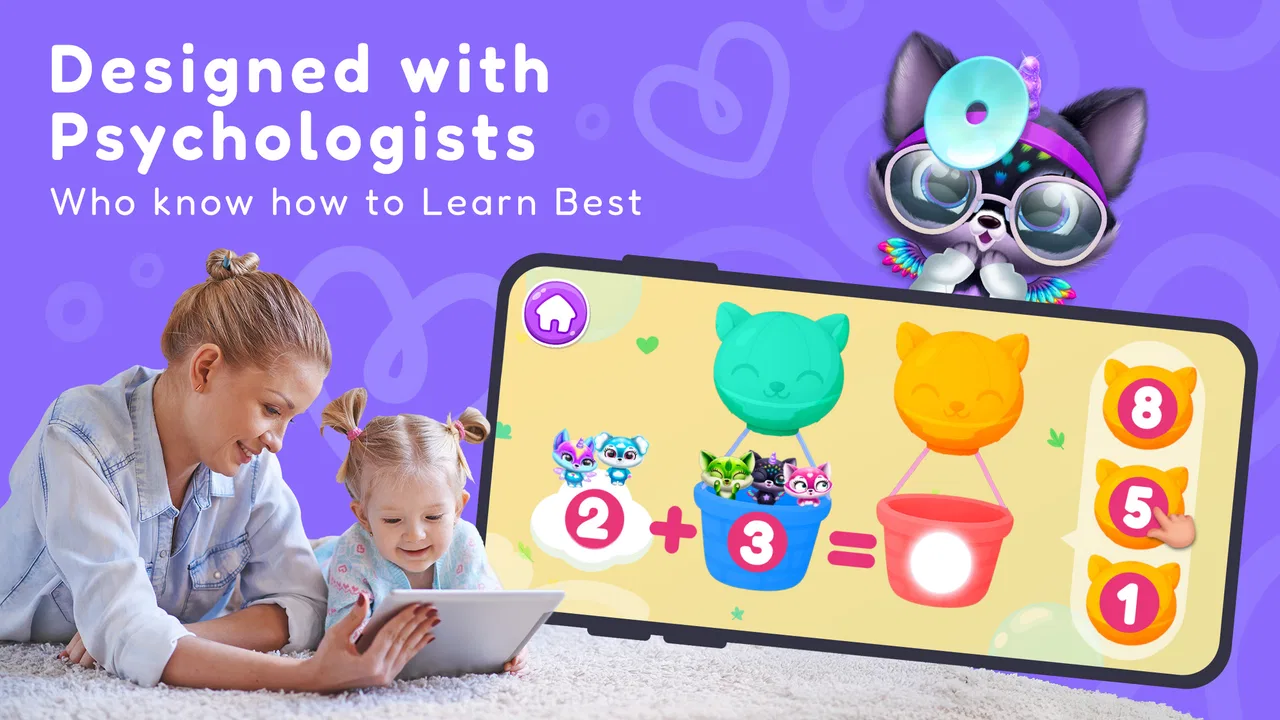
Fluvsies Academy - Kids Games is a free educational game from TutoTOONS that aims to turn early learning into something a toddler can approach through play. Its central promise is simple: children meet the Fluvsies while practicing basic math and everyday life skills. I found that focus more useful than a crowded collection of unrelated mini-games, because it gives parents a clearer idea of what the app is trying to do.
The game is aimed at Everyone and runs on Android devices using at least version 6.0. It is listed as a game rather than a traditional learning utility, and that distinction matters. The experience is designed to feel playful first, with learning folded into the activities instead of presented like a worksheet. For a young child who quickly loses interest in formal exercises, that approach can make a real difference.
At the time of writing, the app has an average rating of 0.0 and more than 50 thousand installs. Those figures do not tell me how well a particular child will respond to it, but they do place the game in the early stage of its public life. It was released on March 2, 2026, and the current version is 1.0.34, so I would treat it as a developing product rather than a long-established learning standard.
You May Also Like

 Blood Strike: 2.5 Anniversary
Blood Strike’s Loadouts Turn Every Drop Into a Tactical Gamble
A close look at Blood Strike’s custom loadouts: how fast access to signature weapons reshapes its battle royale rhythm, rewards preparation, and narrows the gap between fights.

 Pandora - Music & Podcasts
Pandora’s Music Is Easy to Start, but Harder to Recover
Pandora’s strength is its low-effort path from a seed to a station. Its weak spot is how much confidence it asks you to place in connection, setup, and quiet recovery.

 8 Ball Pool
 Is Built on Rivalries, Rematches, and Routine
A close look at the rivalries, rematches, shared routines, and unanswered safety questions that turn a quick pool match into a persistent mobile community.

 Samsung Music
’s Quiet Strength Is Playing What You Already Own
Its reach comes less from spectacle than from dependable access to a personal library. That simplicity is both the app’s strongest retention engine and its ceiling.

 AccuWeather: Weather Radar
AccuWeather Review: A Quick, Clear Forecast for Everyday Decisions
For everyday plans, the best forecast is the one you can understand quickly. AccuWeather makes rain timing, radar, and local conditions easy to act on, with a few trade-offs.

 Hill Climb Racing
Why Hill Climb Racing Still Turns Crashes Into One More Run
A tiny car, a bumpy hill and one more upgrade: Hill Climb Racing keeps resurfacing because its simple chaos makes every near-miss feel personal.
More From Our News Desk
View All News


Learning through the Fluvsies rather than through worksheets
The strongest idea here is the use of familiar, appealing characters as a bridge into learning. A toddler is more likely to try an activity when it feels like helping or playing with a character than when it feels like being tested. In my view, this is the capability that defines the whole app: it uses the Fluvsies setting to make early math and practical skills feel approachable.
That can be especially valuable for children who resist direct instruction. A parent may say, “Let’s play with the Fluvsies,” rather than announcing a lesson. The difference sounds small, but it changes the emotional tone. The child is invited to participate, not corrected before starting. When the activity is short and visually clear, the game can support repetition without making repetition feel like punishment.
The educational angle is also broad enough to connect screen time with routines outside the device. Basic math can support counting objects during tidying, sharing snacks, or sorting toys. Life-skills activities can give a parent a starting point for discussing what the child does at home. I would not expect the game alone to teach independence, but it can help turn an abstract conversation into something a toddler recognizes.
The real strength is not replacing preschool practice; it is creating a low-pressure doorway into it. That makes the app more suitable as a companion to talking, showing, and doing than as a standalone curriculum. If a parent uses the game and then repeats the same idea with real objects, the learning is more likely to travel beyond the screen.
What the learning focus changes for a toddler
Many children’s games offer bright characters but leave the parent guessing what the child is actually practicing. Fluvsies Academy has a more useful direction because its purpose is visible: math and key life skills are placed at the center. That gives me a clearer reason to open it than a purely decorative character game.
There is a trade-off, though. A child looking for open-ended dress-up, storytelling, or unrestricted exploration may find the educational framing less exciting. The same structure that helps a parent choose the app can make it feel narrower than a general kids’ entertainment title. I would recommend it when the goal is guided learning with a playful surface, not when the goal is unlimited creative play.
Another important point is that toddlers do not all learn in the same way. Some will enjoy repeating a familiar activity until they feel confident. Others will tap quickly, skip instructions, or move on as soon as they recognize a pattern. The app can support practice, but a parent still needs to notice whether the child is thinking through the task or simply reacting to colors and movement.
How I would use it during an ordinary day
Imagine a child becoming restless while a parent prepares dinner. A short session can provide a focused activity at a time when a full lesson would be unrealistic. I would sit nearby, let the child attempt the task independently, and then connect the result to something in the kitchen. If the game involves an early math idea, I might count safe objects together afterward. If it touches a life skill, I would demonstrate the same routine with the child once the meal is ready.
This approach avoids a common mistake: treating the app as a digital babysitter with a learning label. The useful part is the handoff between the game and real life. A few minutes of play can introduce the idea, while the parent supplies the physical practice, language, and encouragement the screen cannot provide.
I would also avoid opening it only when the child is already overtired. Educational games work better when the child has enough patience to listen and try. A calm moment after breakfast or before a regular quiet period is likely to produce more meaningful engagement than a rushed session during a difficult transition.
Practical habits that make the experience better
First, I would keep the first session observational. Instead of immediately explaining every action, I would watch how the child approaches the activities. Does the child understand the visual goal? Does the child tap randomly, or pause to decide? This tells me whether the challenge is appropriate and prevents me from giving answers too quickly.
Second, I would use the game as a prompt for language. Parents can ask the child to describe what is happening, name objects, or explain why an answer seems right. That turns a tap-based activity into a conversation. It also reveals whether the child understands the idea or is only following a repeated gesture.
Third, I would stop before frustration becomes the main memory of the session. A child does not need to complete a long block of activities for the time to be worthwhile. Ending after a successful attempt can make it easier to return later. This is a particularly useful habit with toddlers, whose attention can change quickly.
Fourth, I would connect the activity to a real household routine on the same day. If the game introduces counting, count socks while folding laundry. If it touches a practical task, invite the child to help with a safe part of it. This is where the app has a chance to become more than entertainment: it can give a parent a simple teaching cue.
Where it fits beside familiar alternatives
Compared with printed activity books, Fluvsies Academy is more animated and likely to feel immediately inviting to a child who enjoys character-led play. A workbook offers easier control over pace and no screen stimulation, but it also depends more heavily on an adult to keep the child engaged. The game reverses that balance: it supplies the visual invitation, while the parent supplies the context.
Compared with general cartoon or dress-up games, this title has a clearer educational purpose. That makes it a better choice when a family wants playtime to reinforce early math and practical habits. The compromise is that it may not satisfy a child who mainly wants free exploration without a learning objective.
Compared with a dedicated early-learning program, the advantage here is approachability. The Fluvsies theme can make the first step feel less formal. A more structured learning product may be preferable for families seeking a carefully sequenced routine, detailed progress tracking, or a stronger sense of lesson progression. I would choose this game for gentle practice and shared play, not as the only educational resource in a child’s day.
What parents should expect from the free download
The game is free to download, which makes it easy to try without committing money at the beginning. However, it includes in-app purchases priced from $9.99 to $59.99 per item. For a toddler’s device, I would check purchase controls before handing it over. The free entry point is useful, but families should decide in advance whether optional spending is acceptable rather than making that decision in the middle of play.
The Everyone age classification makes the app broadly suitable for children, but an age label is not the same as a guarantee that every activity will match every toddler’s ability. I would still preview the experience and stay close during early sessions. That lets me judge the pace, the level of help needed, and whether the child is enjoying the educational tasks rather than merely tapping through them.
Because the current version is 1.0.34 and the release is recent, I would also keep expectations flexible about how the product may develop. Early versions can improve over time, but they can also feel less polished than mature alternatives. That does not make the game a poor choice; it simply means I would evaluate it by the child’s actual response instead of assuming that the character theme guarantees a perfect fit.
Who benefits most from this approach
I think the best match is a toddler who enjoys cute characters, benefits from repetition, and needs encouragement before engaging with learning tasks. It also suits parents who want a ready-made activity that can lead into counting, sorting, or everyday conversations without preparing a lesson from scratch.
It can be particularly helpful for a family trying to make short periods of screen time more intentional. The game gives the child something entertaining to do while giving the adult a clear follow-up: talk about the task, repeat the idea with household objects, or invite the child to try the related routine.
I would be more cautious about recommending it to a child who becomes overstimulated by animated games, prefers physical materials, or needs a very predictable curriculum. In those cases, blocks, picture cards, guided play, or a more structured educational product may work better. The app should also be skipped as a primary solution if a parent expects independent mastery without conversation or real-world practice.
For older children, the early-learning focus may feel too simple. The Everyone rating makes the game accessible, but accessibility is not the same as depth for every age. Its natural audience is a young learner beginning to encounter numbers and practical routines, not a child looking for advanced challenges.
My final take on the learning experience
Fluvsies Academy - Kids Games has a clear and worthwhile role: it makes early educational practice feel like character play. I like that its focus on math and life skills gives screen time a more useful direction than a game built only around visual distraction. The best results will come when an adult treats each activity as a starting point for conversation and hands-on practice.
Its limitations are just as important. It is not a substitute for real interaction, printed materials, physical play, or a complete early-learning plan. The free download is approachable, but the in-app purchase range deserves attention before a child uses the game alone. And because it is a recently released title, I would try it personally before making it a regular part of the family routine.
My recommendation is positive for parents seeking a gentle, character-led educational game for a toddler. I would use it in short sessions, sit nearby at first, and link the on-screen idea to something the child can count, name, sort, or practice away from the device. Used that way, the game’s most valuable feature is not simply that it teaches through play; it is that it gives parents an easy bridge from playful tapping to meaningful everyday learning.
FAQs for Fluvsies Academy - Kids Games
01What age group is Fluvsies Academy - Kids Games suitable for?
Fluvsies Academy is designed for children aged 3 to 8 years old. The game features engaging activities that are both educational and entertaining, catering to young kids' developmental needs. Parents can rest assured that the content is age-appropriate and encourages creativity, problem-solving, and learning through play.
02Is Fluvsies Academy safe for children to use?
Yes, Fluvsies Academy is safe for children. The app does not contain harmful content, and the developers prioritize child safety by ensuring a secure environment. It is free from inappropriate material and offers parental controls to monitor gameplay and screen time, providing peace of mind for parents.
03Does Fluvsies Academy require an internet connection?
Fluvsies Academy can be played offline, allowing children to enjoy the game without needing an internet connection. However, some features, updates, or in-app purchases may require connectivity. Playing offline ensures that children can engage with the app without any interruptions or additional data usage.
04Are there in-app purchases in Fluvsies Academy?
Fluvsies Academy offers in-app purchases that enhance the gaming experience by providing access to additional content and features. While the base game is free, parents may wish to manage or restrict these purchases through device settings to prevent unintended spending by children.
05How does Fluvsies Academy support educational development?
Fluvsies Academy supports educational development by incorporating activities that enhance cognitive skills, such as puzzles and problem-solving challenges. The game encourages creativity, logical thinking, and hand-eye coordination, making learning enjoyable for children. It balances fun with education, ensuring kids gain valuable skills while playing.
Pros
- Engaging educational activities.
- Colorful and kid-friendly design.
- Stimulates creativity and learning.
- Easy navigation for young users.
- Offline play available.
Cons
- Limited content without purchases.
- May require parental guidance.
- Ads can disrupt gameplay.
- Some features need internet.
- Limited language options.

Fluvsies Academy - Kids Games
Gallery